- First documented
- 1700s
- Fiber
- cotton
- Weave
- weft-pile cut into wales
- Family
- pile
Plate No. 035 · fabric
Corduroy
Corduroy is a cotton pile cloth in the fustian family: extra weft yarns float over the ground weave, are cut, and brush up into velvety ribs called wales that run the length of the cloth. The wale count per inch names the cloth, from fat eight-wale jumbo cord to fine twenty-one-wale needlecord. Woven around Manchester from the eighteenth century, it became the hard-wearing cloth of laborers and farmers, then of professors and 1970s tailoring. The render shows its signature ribbed face in stylized form.
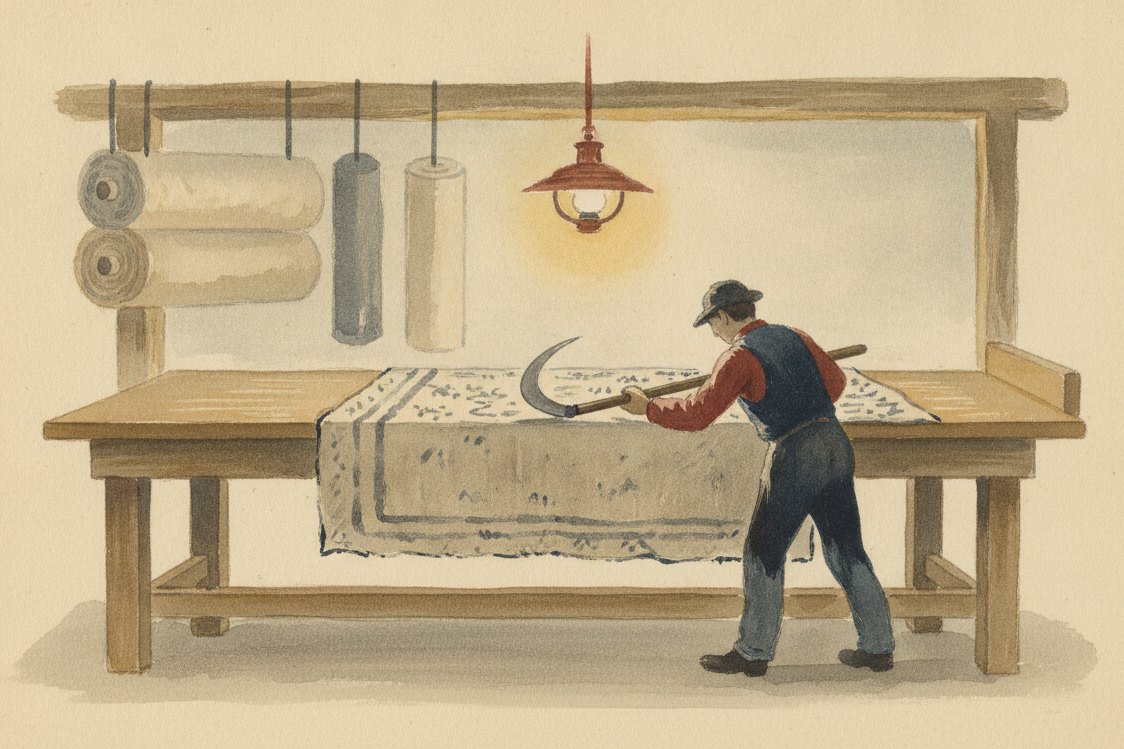
Named for
Probably from cord plus duroy, an old English coarse cloth. The popular story that it is French for cord of the king, corde du roi, is folk etymology with no French source.
Also known as
cord
Common questions
- What is Corduroy made of?
- Corduroy is a cotton pile cloth in the fustian family: extra weft yarns float over the ground weave, are cut, and brush up into velvety ribs called wales that run the length of the cloth.
- Where does Corduroy come from?
- Corduroy comes from Manchester, the United Kingdom, first documented in the 1700s.
- What is Corduroy named after?
- Probably from cord plus duroy, an old English coarse cloth. The popular story that it is French for cord of the king, corde du roi, is folk etymology with no French source.
Often confused with
From the journal
Sources & References
Related specimens





Stay in the loop
From the Almanac
Updates from Fabric Almanac, when there is something worth sharing.