Plate No. 024fabric
- First documented
- early 1800s
- Origin
- Scotland, United Kingdom
- Fiber
- wool
- Weave
- 2/2 twill
- Family
- twills
Plate No. 024 · fabric
Tweed
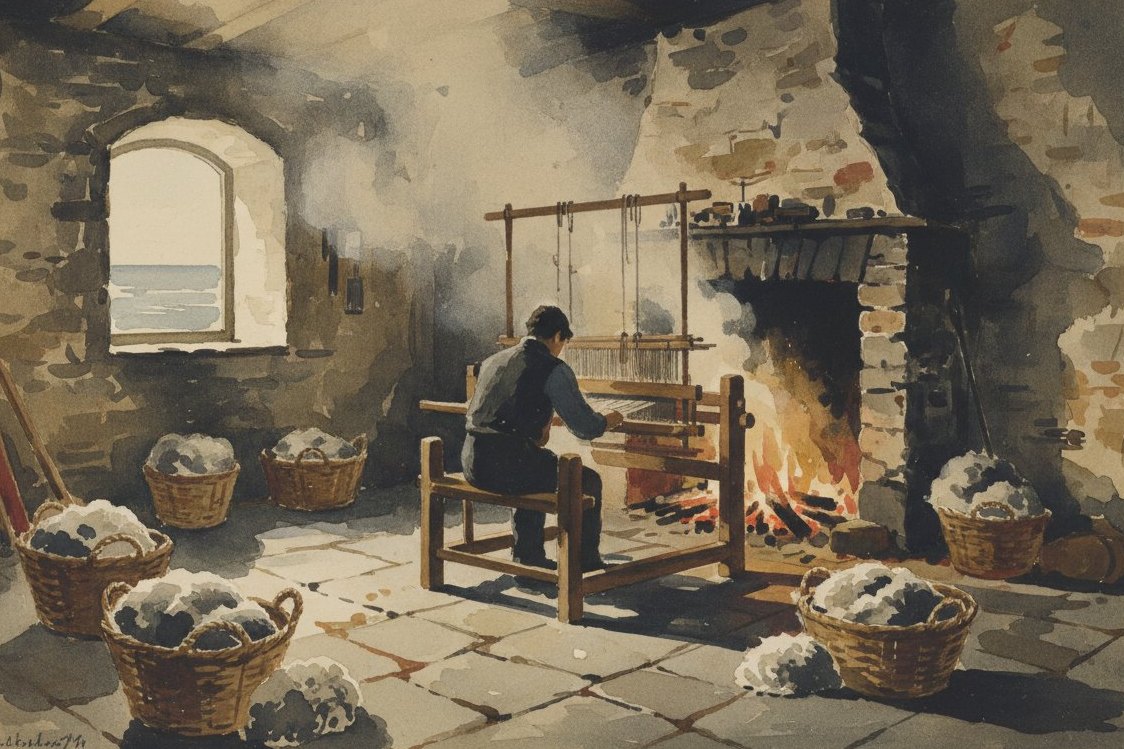
Tweed is a rough, flexible woolen cloth, usually a twill, woven from yarns spun with mixed-color fibers that give the surface its flecked, heathered depth. It grew out of the working cloth of Scotland and Ireland, woven to shrug off wind and damp, and was taken up in the nineteenth century by sporting estates, each of which dressed its keepers in a distinctive estate tweed. Named tweeds mark their sources: Harris from the Outer Hebrides, Donegal from Ireland, Shetland and Cheviot from their sheep.
Named for
By tradition, a London clerk's misreading of tweel, the Scots word for twill, helped along by the river Tweed of the Scottish Borders.
In the record
- 1846Lady Dunmore began promoting the handwoven tweed of Harris to British society, the start of the Harris Tweed trade.
Common questions
- What is Tweed made of?
- Tweed is a rough, flexible woolen cloth, usually a twill, woven from yarns spun with mixed-color fibers that give the surface its flecked, heathered depth.
- Where does Tweed come from?
- Tweed comes from the United Kingdom, Scotland, first documented in the early 1800s.
- What is Tweed named after?
- By tradition, a London clerk's misreading of tweel, the Scots word for twill, helped along by the river Tweed of the Scottish Borders.
Often confused with
From the journal
Sources & References
- 1.Tweed, Wikipedia
- 2.Harris Tweed, Wikipedia
Related specimens

Stay in the loop
From the Almanac
Updates from Fabric Almanac, when there is something worth sharing.