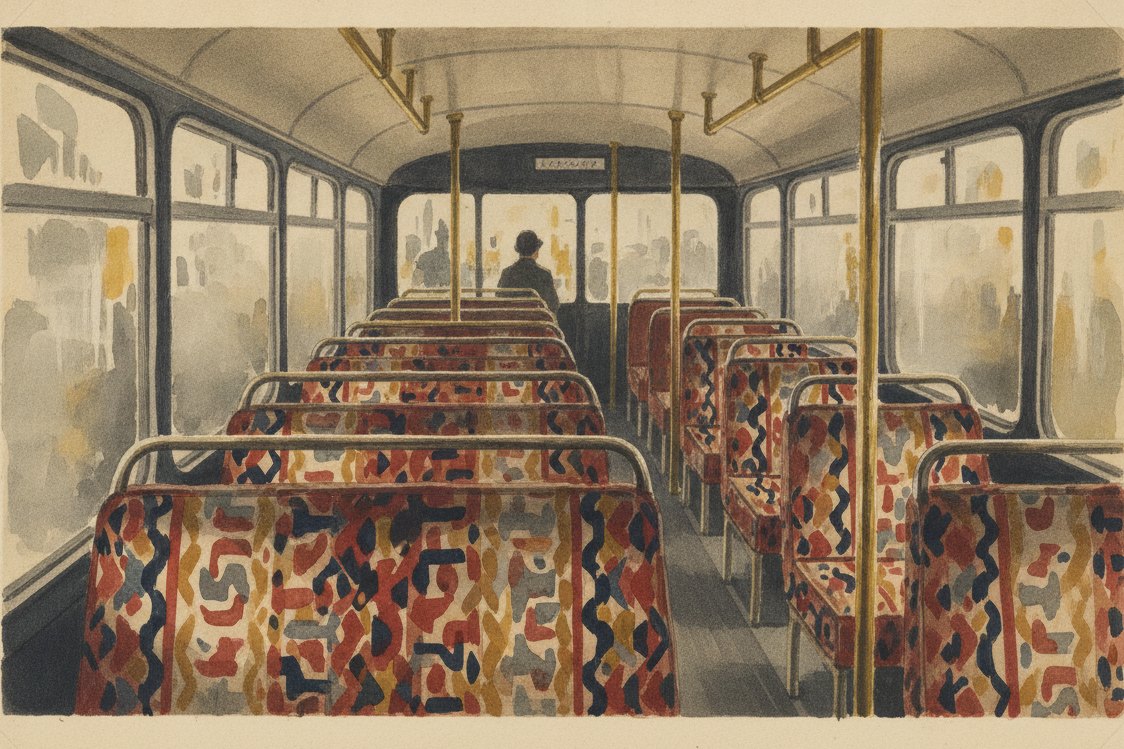
The dense, abrasion-proof woven pile of the bus and train seat.
- First documented
- 1700s
- Origin
- France, France
- Fiber
- wool, nylon
- Weave
- dense woven pile, cut or looped
- Family
- pile
Plate No. 148 · fabric
Moquette
Moquette is a hard-wearing woven pile fabric, traditionally wool, built tough enough to survive decades of abrasion, which is why it became the cloth of public transport: the patterned seat covering of buses, trams, and underground trains. Its dense looped or cut pile hides dirt and wear, and the bold geometric patterns woven into it, a tradition in itself among transit authorities, are designed to disguise stains while brightening a carriage. The same durable pile also covers theater and cinema seats and traditional upholstery.
Named for
From the French moquette, a carpet or pile cloth, possibly from an older word for a tuft of wool.
Common questions
- What is Moquette made of?
- Moquette is a hard-wearing woven pile fabric, traditionally wool, built tough enough to survive decades of abrasion, which is why it became the cloth of public transport: the patterned seat covering of buses, trams, and underground trains.
- Where does Moquette come from?
- Moquette comes from France, first documented in the 1700s.
- What is Moquette named after?
- From the French moquette, a carpet or pile cloth, possibly from an older word for a tuft of wool.
Sources & References
Related specimens





Stay in the loop
From the Almanac
Updates from Fabric Almanac, when there is something worth sharing.