The render is a stylized impression of matted fiber.
- First documented
- Antiquity
- Origin
- Central Asia, Mongolia
- Fiber
- wool
- Weave
- nonwoven, matted fiber
- Family
- pile
Plate No. 054 · fabric
Felt
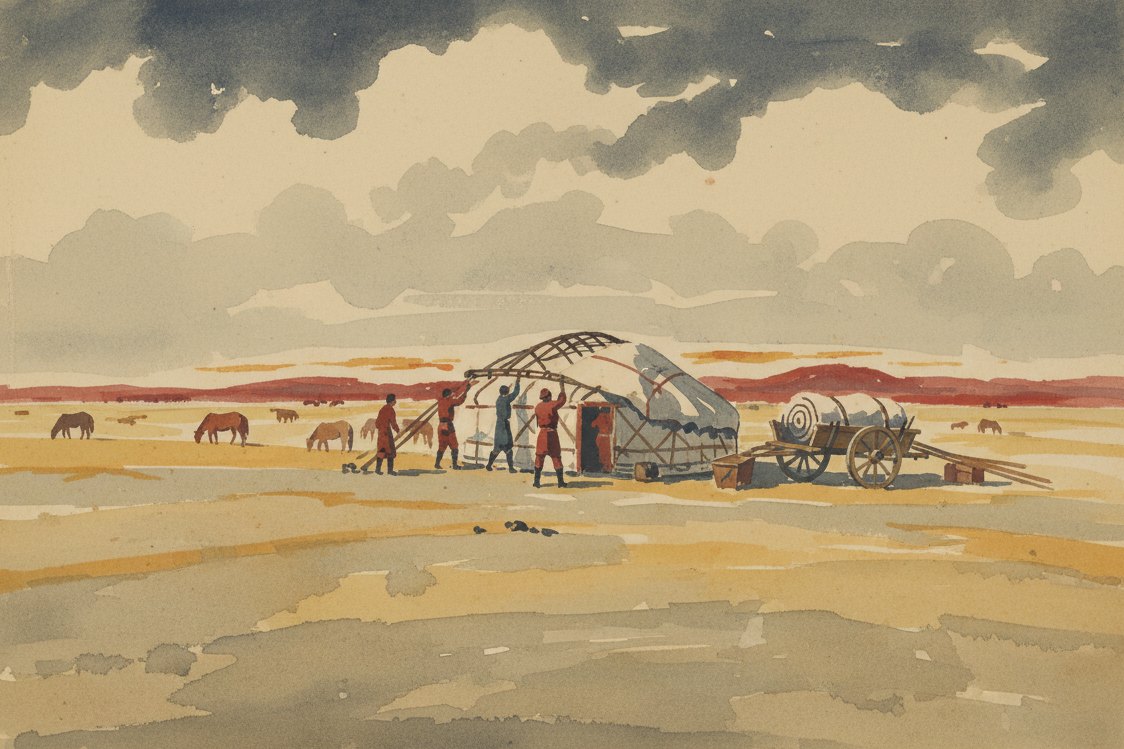
Felt is the cloth with no weave at all: wool fibers, whose microscopic scales lock when worked with moisture, heat, and pressure, are matted directly into fabric. It is likely older than weaving itself, and it built the tent cultures of Central Asia, where felt walls still cover yurts and gers as they have for millennia. In Europe felt became the hatmaker's material, and the mercury once used to mat fur for hats poisoned enough hatters to lodge mad as a hatter in the language. The render is a stylized impression of matted fiber; felt has no thread structure to draw.
Named for
From Old English and common Germanic felt, related to the idea of beating and pressing: felt is cloth made by force.
In the record
- AntiquityCentral Asian nomads developed felt into walls, saddles, and boots; the yurt remains a felt building.
Common questions
- What is Felt made of?
- Felt is the cloth with no weave at all: wool fibers, whose microscopic scales lock when worked with moisture, heat, and pressure, are matted directly into fabric.
- Where does Felt come from?
- Felt comes from Mongolia, Central Asia, where it dates to Antiquity.
- What is Felt named after?
- From Old English and common Germanic felt, related to the idea of beating and pressing: felt is cloth made by force.
Often confused with
Sources & References
Related specimens

Stay in the loop
From the Almanac
Updates from Fabric Almanac, when there is something worth sharing.