Combed yarn gives the clean, lean twill of suiting.
- First documented
- 1100s
- Fiber
- wool
- Weave
- twill or plain, from combed long-staple wool
- Family
- twills
Plate No. 090 · fabric
Worsted
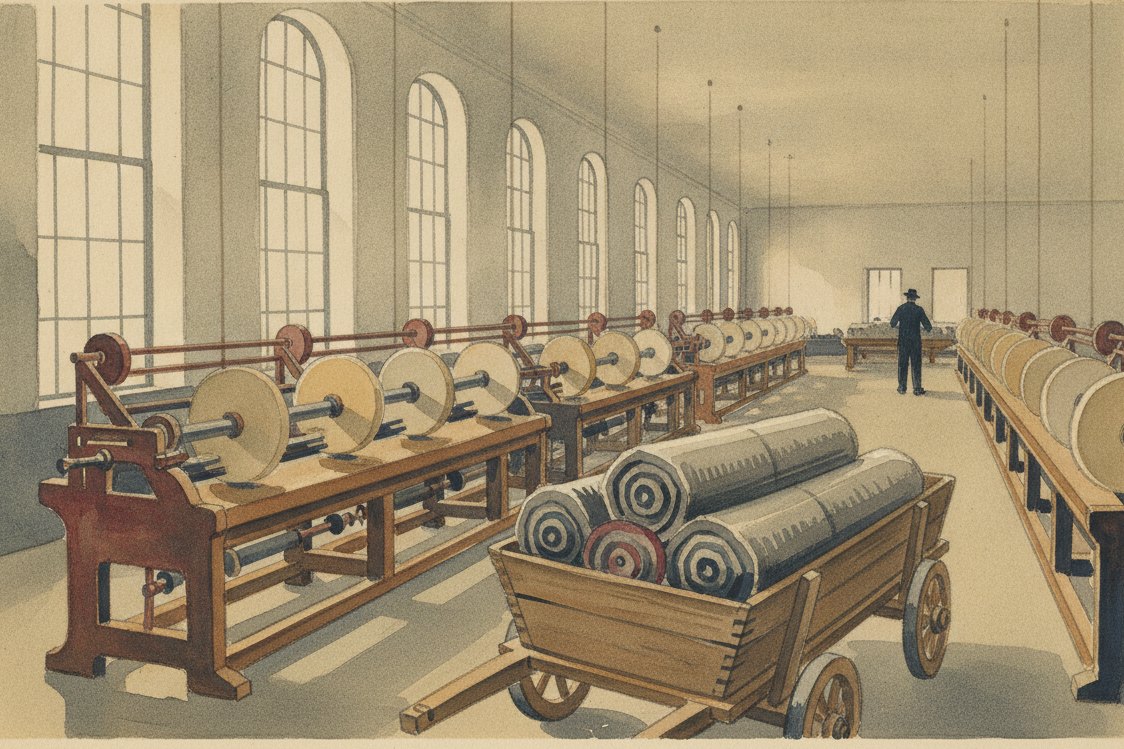
Worsted is wool made smooth: the fibers are combed straight and parallel before spinning, the short ones combed out, so the yarn is fine, strong, and lean, and the cloth shows a clear weave and a crisp finish instead of a fuzzy nap. It is the opposite of woolen, where the fibers are left jumbled and lofty. Most tailored suiting is worsted, which is why a good suit holds a sharp line and a pressed crease; the cloth takes its name from the Norfolk village of Worstead, a medieval wool town.
Named for
Named for Worstead, the Norfolk village whose Flemish-settled weavers made the smooth combed-wool cloth.
Common questions
- What is Worsted made of?
- Worsted is wool made smooth: the fibers are combed straight and parallel before spinning, the short ones combed out, so the yarn is fine, strong, and lean, and the cloth shows a clear weave and a crisp finish instead of a fuzzy nap.
- Where does Worsted come from?
- Worsted comes from Worstead, the United Kingdom, first documented in the 1100s.
- What is Worsted named after?
- Named for Worstead, the Norfolk village whose Flemish-settled weavers made the smooth combed-wool cloth.
From the journal
Sources & References
Related specimens


Stay in the loop
From the Almanac
Updates from Fabric Almanac, when there is something worth sharing.