Plate No. 044fabric
- First documented
- 1800s
- Origin
- Central Asia, Turkmenistan
- Fiber
- silk, polyester
- Weave
- plain weave, sheer open sett
- Family
- plain
Plate No. 044 · fabric
Organza
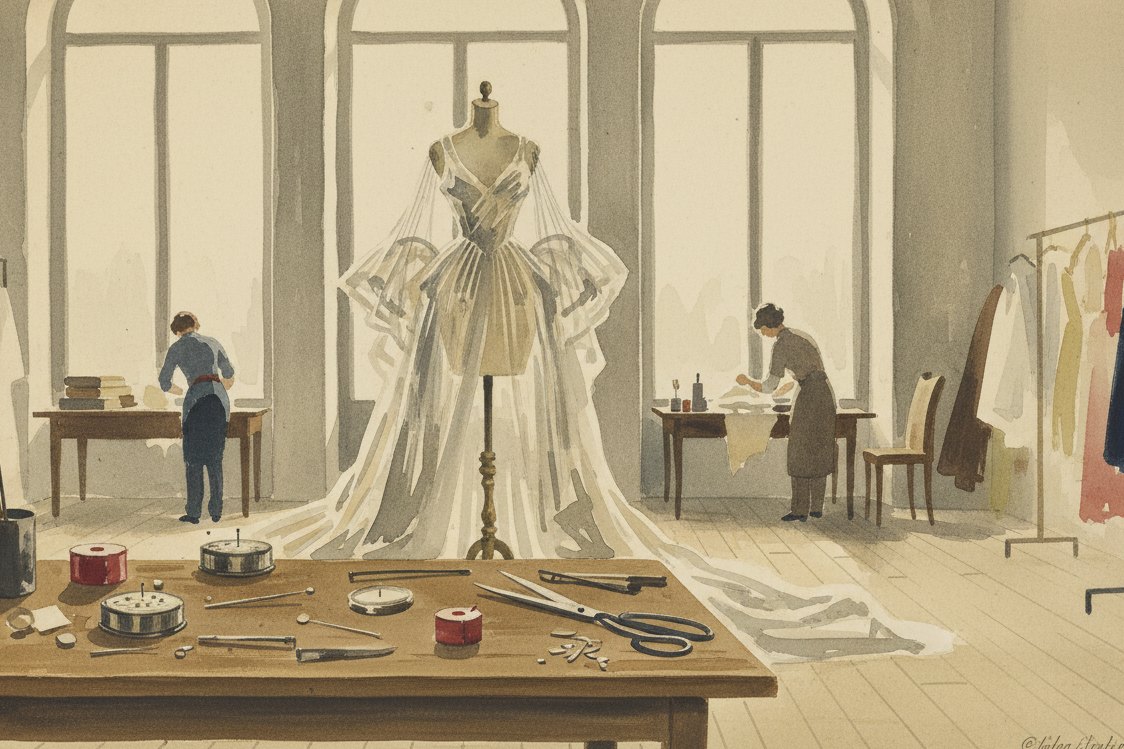
Organza is a sheer, stiff plain-weave cloth of tightly twisted filament yarns, woven so open that the fabric is more air than fiber. The high twist and acid finishing give it a springy crispness no soft sheer has: organza holds a sculpted shape, which is why it builds the structured volumes of bridal wear, evening gowns, and couture overlays. It is the architectural one of the sheer silks, where chiffon is the draping one.
Named for
Likely from organzine, the high-twist thrown silk yarn it is woven from, a word tied by tradition to the old silk-market town of Urgench.
Common questions
- What is Organza made of?
- Organza is a sheer, stiff plain-weave cloth of tightly twisted filament yarns, woven so open that the fabric is more air than fiber. It is traditionally made of silk or polyester.
- Where does Organza come from?
- Organza comes from Turkmenistan, Central Asia, first documented in the 1800s.
- What is Organza named after?
- Likely from organzine, the high-twist thrown silk yarn it is woven from, a word tied by tradition to the old silk-market town of Urgench.
Often confused with
Sources & References
Related specimens




Stay in the loop
From the Almanac
Updates from Fabric Almanac, when there is something worth sharing.