Drawn as the mesh itself: tulle is mostly open air.
- First documented
- 1700s
- Origin
- Tulle, Correze, France
- Fiber
- silk, nylon, polyester
- Weave
- bobbinet hexagonal mesh
- Family
- plain
Plate No. 058 · fabric
Tulle
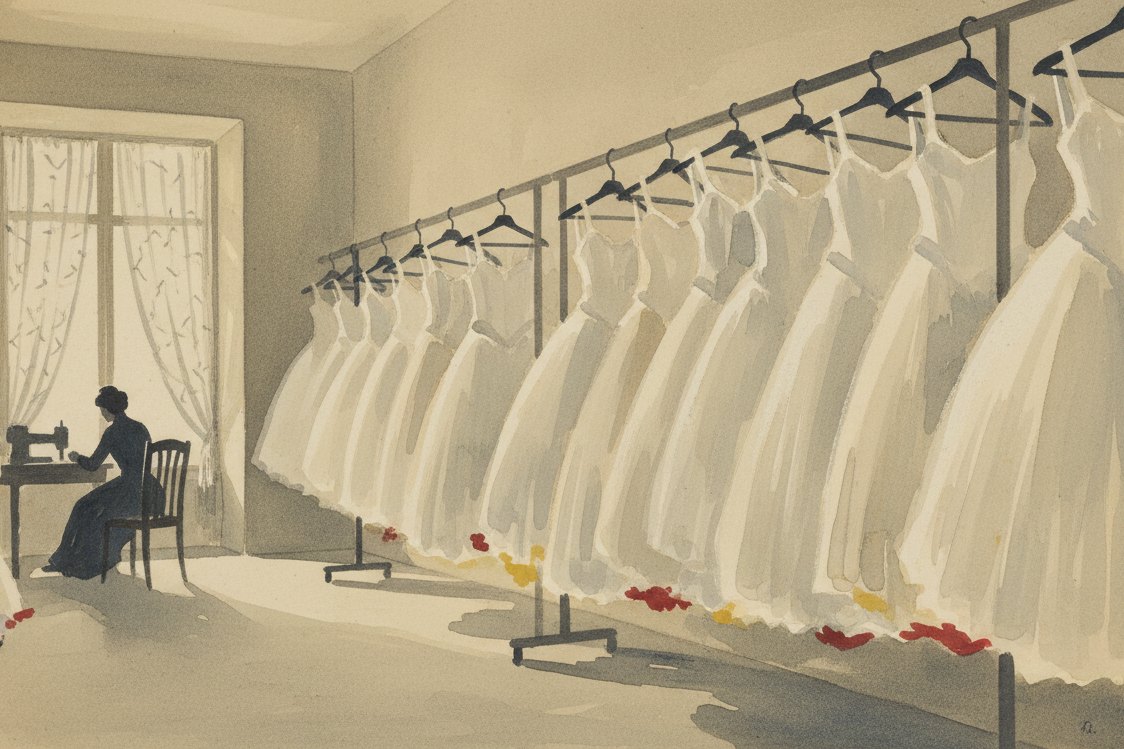
Tulle is the finest of the nets: a stiff, lightweight mesh of tiny openings, more air than thread, named for the French town where the handmade net trade flourished. The machine that defined it was John Heathcoat's bobbinet machine of 1808, which twisted threads into a hexagonal net no loom could make and turned net from a luxury handcraft into an industry. Tulle is the cloth of ballet: layered by the dozen it becomes the romantic tutu, and a single layer over a bride's face is simply called illusion.
Named for
Named for the town of Tulle in central France, an early center of the handmade net trade.
In the record
- 1808John Heathcoat patented the bobbinet machine, mechanizing the twisted hexagonal net.
Common questions
- What is Tulle made of?
- Tulle is the finest of the nets: a stiff, lightweight mesh of tiny openings, more air than thread, named for the French town where the handmade net trade flourished. It is traditionally made of silk, nylon, or polyester.
- What is Tulle named after?
- Named for the town of Tulle in central France, an early center of the handmade net trade.
Often confused with
Sources & References
- 1.Tulle (netting), Wikipedia
- 2.Bobbinet, Wikipedia
Related specimens





Stay in the loop
From the Almanac
Updates from Fabric Almanac, when there is something worth sharing.