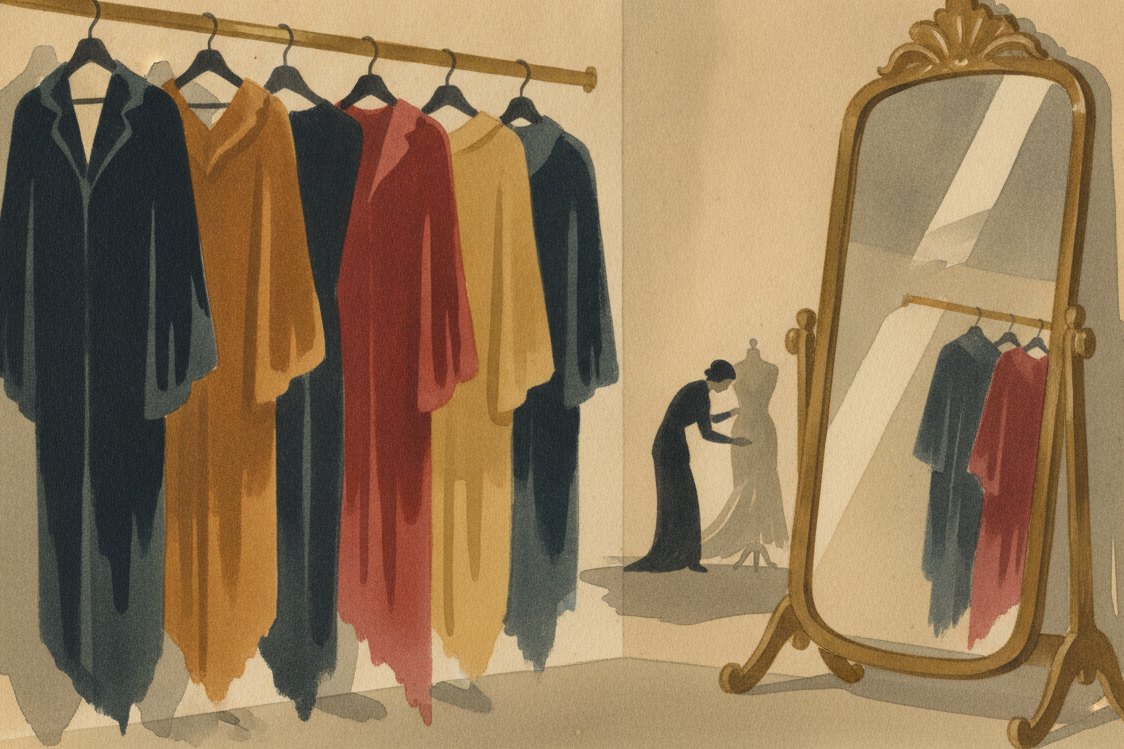
Pile pressed one way, catching light in a watery sheen.
- First documented
- 1800s
- Origin
- France, France
- Fiber
- silk, rayon, polyester
- Weave
- velvet with the pile pressed flat in one direction
- Family
- pile
Plate No. 161 · fabric
Panne Velvet
Panne velvet is velvet whose pile has been pressed flat in a single direction under heat and heavy pressure, so that instead of standing upright the fibers all lie one way and reflect light in a bright, watery sheen. That treatment, a cousin of the crushing that makes crushed velvet, gives panne a high luster and a fluid, almost liquid drape much lighter than the upright pile of plain velvet. It became a cloth of eveningwear, opera capes, and the costumes of dance and skating, anywhere a garment needed to catch and pour the light as it moved.
Named for
From the French panne, a long-pile velvet or plush; the cloth is the crushed, flattened form of it.
Also known as
panne
Common questions
- What is Panne Velvet made of?
- Panne velvet is velvet whose pile has been pressed flat in a single direction under heat and heavy pressure, so that instead of standing upright the fibers all lie one way and reflect light in a bright, watery sheen. It is traditionally made of silk, rayon, or polyester.
- Where does Panne Velvet come from?
- Panne Velvet comes from France, first documented in the 1800s.
- What is Panne Velvet named after?
- From the French panne, a long-pile velvet or plush; the cloth is the crushed, flattened form of it.
Often confused with
Sources & References
- 1.Panne velvet, Wikipedia
- 2.Velvet, Wikipedia
Related specimens



Stay in the loop
From the Almanac
Updates from Fabric Almanac, when there is something worth sharing.