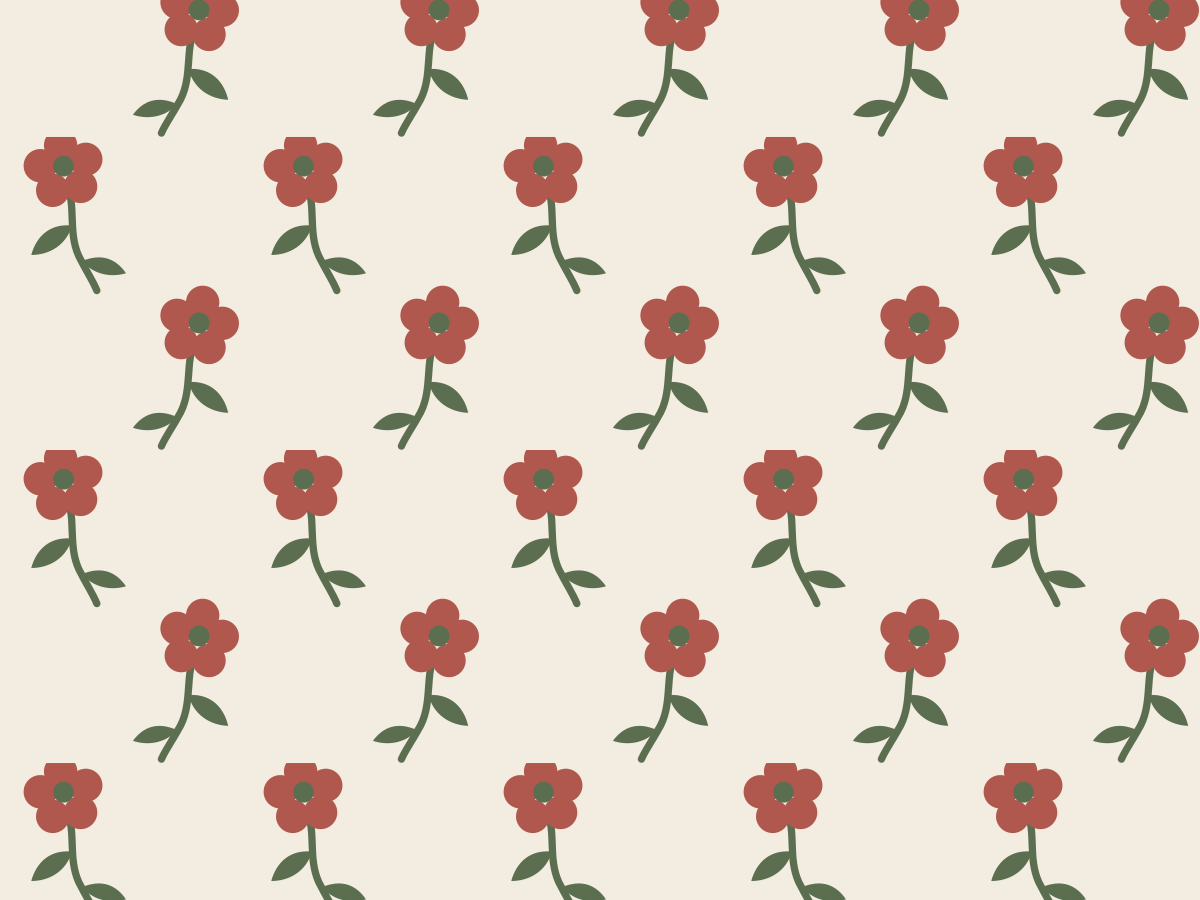
A small floral sprig stamped from a carved block.
- First documented
- Antiquity
- Origin
- Rajasthan, India
- Fiber
- cotton
- Weave
- pattern stamped from hand-carved wooden blocks
- Family
- prints
Plate No. 156 · pattern
Block Print
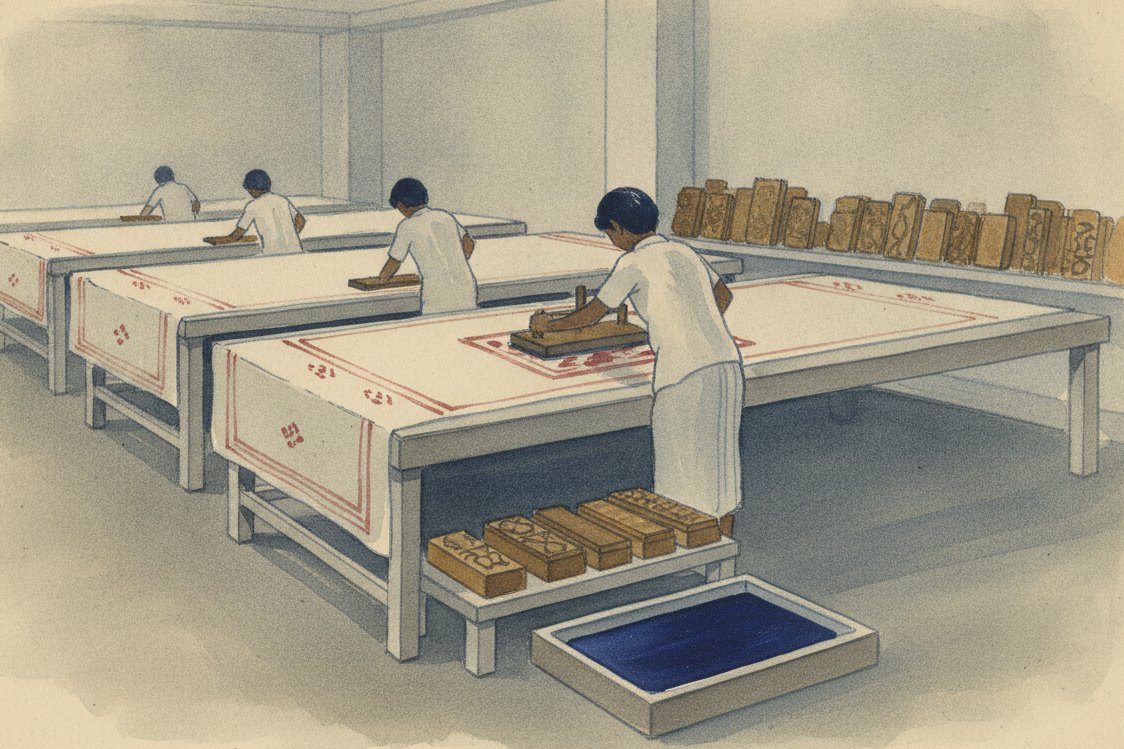
Block printing is the oldest way of putting a repeating pattern onto finished cloth: a craftsman carves a design in relief into a wooden block, charges it with dye, and stamps it across the fabric, registering each impression to the last by eye and by small guide pins. The hand-block printing towns of Rajasthan, Bagru and Sanganer above all, built a tradition of small floral sprigs, the buti, and dense field patterns that fed the Indian printed-cotton trade and the European taste for calico and chintz. Slower and subtler than the engraved rollers that industrialized printing, it survives as a prized craft.
Named for
Descriptive: the pattern is printed by stamping the cloth with carved wooden blocks.
Common questions
- What is Block Print made of?
- Block printing is the oldest way of putting a repeating pattern onto finished cloth: a craftsman carves a design in relief into a wooden block, charges it with dye, and stamps it across the fabric, registering each impression to the last by eye and by small guide pins. It is traditionally made of cotton.
- Where does Block Print come from?
- Block Print comes from India, Rajasthan, where it dates to Antiquity.
- What is Block Print named after?
- Descriptive: the pattern is printed by stamping the cloth with carved wooden blocks.
Often confused with
From the journal
Sources & References
- 1.Woodblock printing on textiles, Wikipedia
- 2.Textile printing, Wikipedia
Related specimens


Stay in the loop
From the Almanac
Updates from Fabric Almanac, when there is something worth sharing.