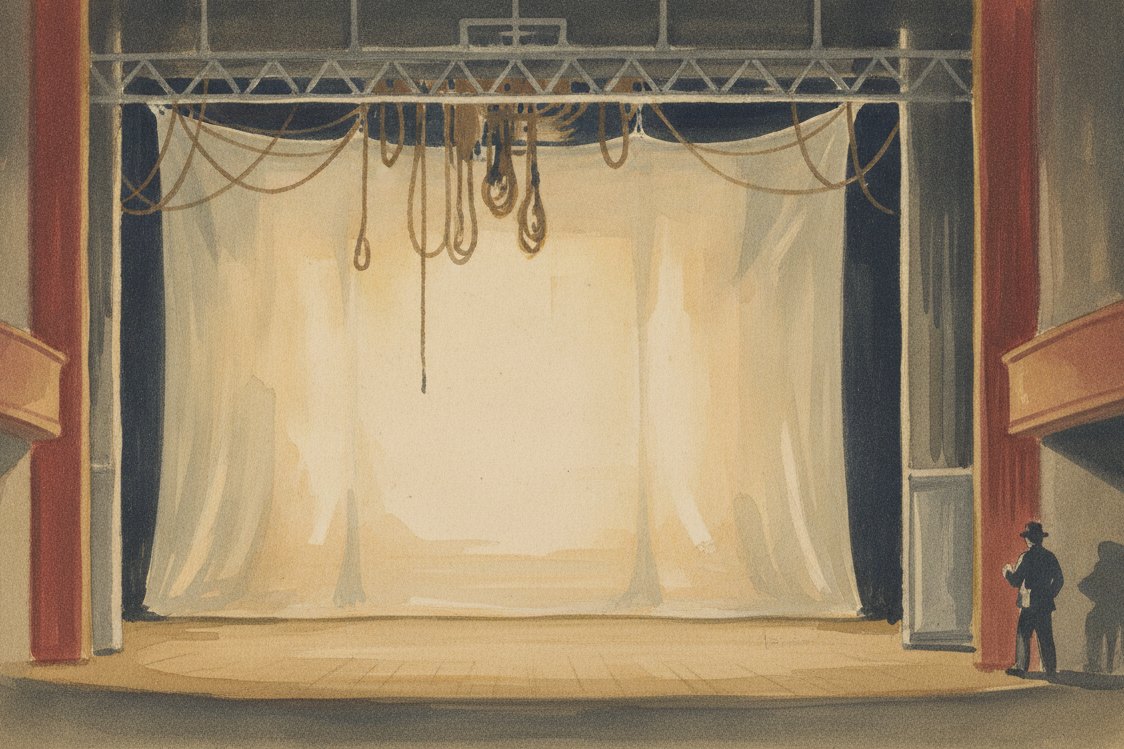
A very open plain weave, nearly sheer, the theater scrim.
- First documented
- 1700s
- Origin
- Britain, United Kingdom
- Fiber
- cotton, linen
- Weave
- very open, lightweight plain weave
- Family
- plain
Plate No. 134 · fabric
Scrim
Scrim is a strong, very open, lightweight plain weave with widely spaced threads, leaving the cloth almost transparent. In the theater it is the magic fabric of the stage: lit from the front it appears solid, lit from behind it turns transparent, which lets a scene appear or vanish. Beyond the stage, scrim reinforces plaster and bookbindings, backs upholstery, and serves wherever an open, stable, gridded cloth is wanted. It is defined by its openness, the loosest useful plain weave short of a true net.
Named for
Of uncertain origin, recorded from the early 1700s as the name of a thin, open cloth.
Common questions
- What is Scrim made of?
- Scrim is a strong, very open, lightweight plain weave with widely spaced threads, leaving the cloth almost transparent. It is traditionally made of cotton or linen.
- Where does Scrim come from?
- Scrim comes from the United Kingdom, Britain, first documented in the 1700s.
- What is Scrim named after?
- Of uncertain origin, recorded from the early 1700s as the name of a thin, open cloth.
Often confused with
Sources & References
- 1.Scrim (material), Wikipedia
- 2.Plain weave, Wikipedia
Related specimens




Stay in the loop
From the Almanac
Updates from Fabric Almanac, when there is something worth sharing.