The rippling watermark is pressed into the rib, not woven.
- First documented
- 1600s
- Origin
- France, France
- Fiber
- silk
- Weave
- ribbed plain weave, calendered
- Family
- plain
Plate No. 091 · fabric
Moire
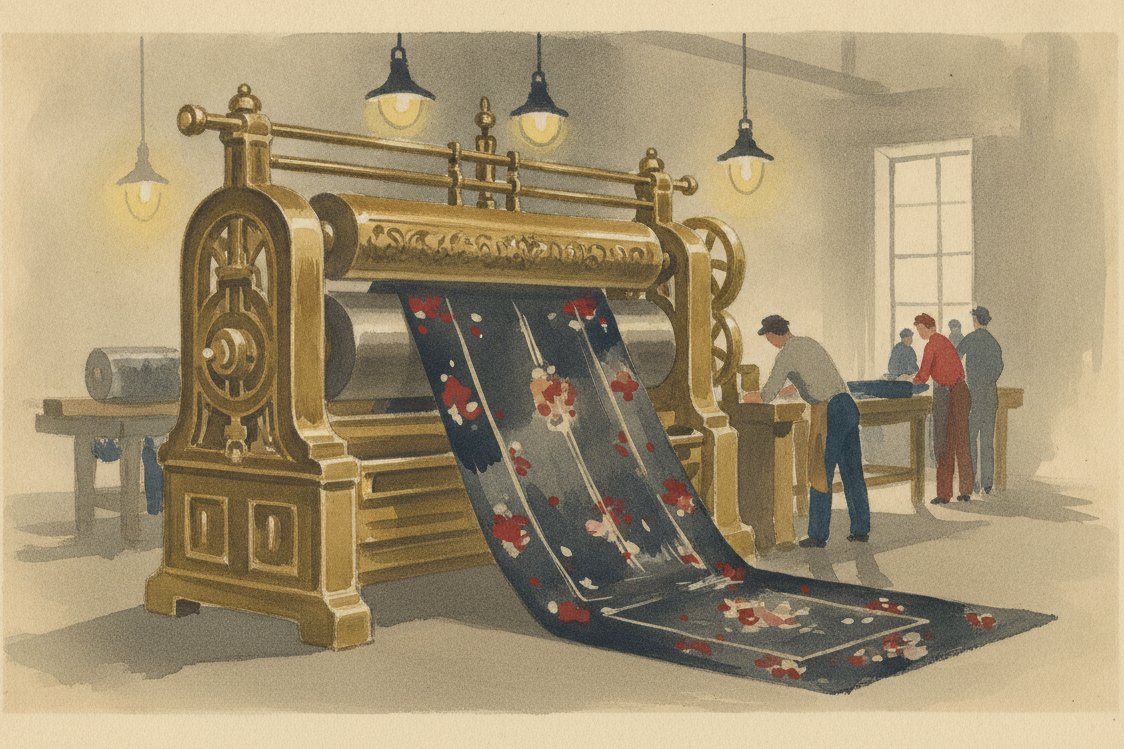
Moire is the watered silk: a ribbed cloth like faille run through engraved rollers under heat and pressure so the ribs are flattened unevenly, throwing a rippling, woodgrain-like figure that shifts as the cloth moves. The watermark is a finish, not a weave, pressed in rather than woven, and historically it could not survive wetting, which is half why watered silk read as luxury. It clothes ceremonial sashes, academic and ecclesiastical robes, and the lining of opera capes, anywhere a surface should seem to move in the light.
Named for
From the French moire, itself an alteration of English mohair; the verb moirer means to water, for the watered finish.
Also known as
moiré, watered silk
Common questions
- What is Moire made of?
- Moire is the watered silk: a ribbed cloth like faille run through engraved rollers under heat and pressure so the ribs are flattened unevenly, throwing a rippling, woodgrain-like figure that shifts as the cloth moves.
- Where does Moire come from?
- Moire comes from France, first documented in the 1600s.
- What is Moire named after?
- From the French moire, itself an alteration of English mohair; the verb moirer means to water, for the watered finish.
Sources & References
- 1.Moire (fabric), Wikipedia
- 2.moire, Online Etymology Dictionary
Related specimens



Stay in the loop
From the Almanac
Updates from Fabric Almanac, when there is something worth sharing.