Plate No. 086fabric
Low, close crosswise ribs catch the light.
- First documented
- 1600s
- Origin
- France, France
- Fiber
- silk, cotton
- Weave
- plain weave, flat crosswise rib
- Family
- stripes
Plate No. 086 · fabric
Faille
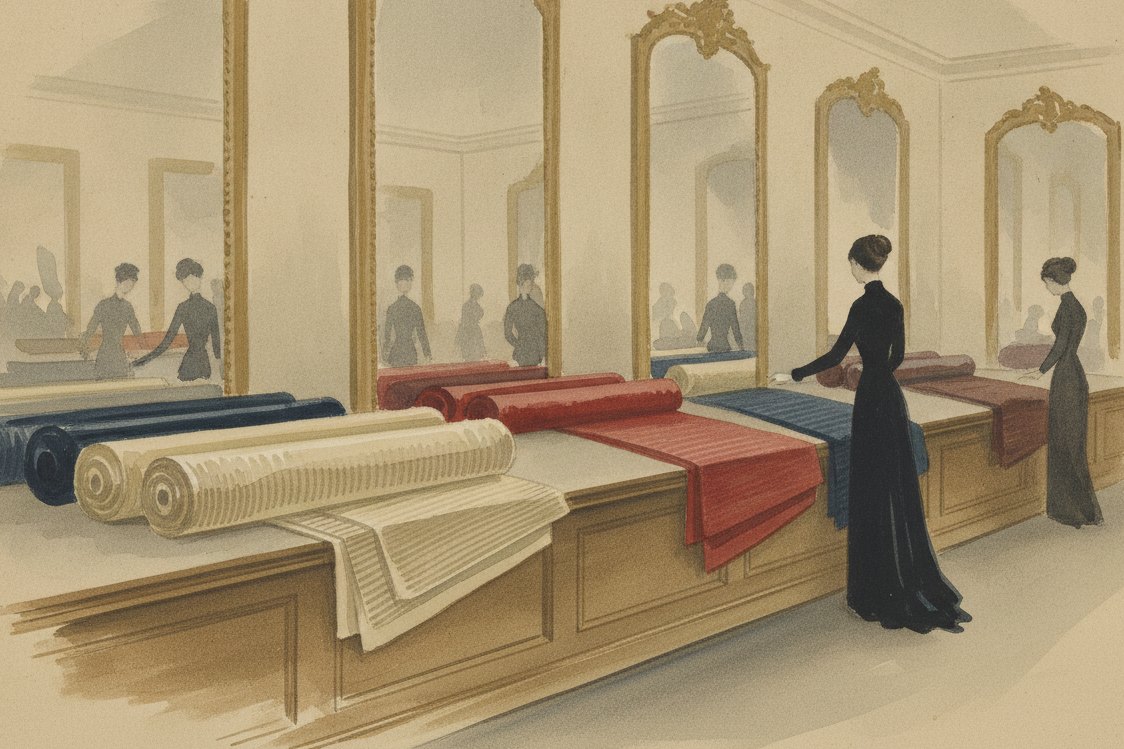
Faille is a soft, flat-ribbed plain weave: fine warp threads bend over a slightly heavier weft to raise low, closely spaced crosswise ribs, giving the cloth a quiet horizontal grain and a subtle sheen. It sits between the flat smoothness of taffeta and the bold cords of ottoman, dressy but supple. Faille made wedding gowns, opera coats, and the grosgrain-adjacent ribbons and facings of fine tailoring, prized because it drapes more softly than its crispness suggests.
Named for
From the French faille, a word once used for a woman's hood or veil of the cloth.
Common questions
- What is Faille made of?
- Faille is a soft, flat-ribbed plain weave: fine warp threads bend over a slightly heavier weft to raise low, closely spaced crosswise ribs, giving the cloth a quiet horizontal grain and a subtle sheen. It is traditionally made of silk or cotton.
- Where does Faille come from?
- Faille comes from France, first documented in the 1600s.
- What is Faille named after?
- From the French faille, a word once used for a woman's hood or veil of the cloth.
Often confused with
Sources & References
Related specimens





Stay in the loop
From the Almanac
Updates from Fabric Almanac, when there is something worth sharing.