The coarse, strong, golden bast fiber of sacking and rope.
- First documented
- Antiquity
- Origin
- Bengal, India
- Fiber
- jute
- Weave
- coarse bast fiber, woven into sacking
- Family
- fibers
Plate No. 152 · fabric
Jute
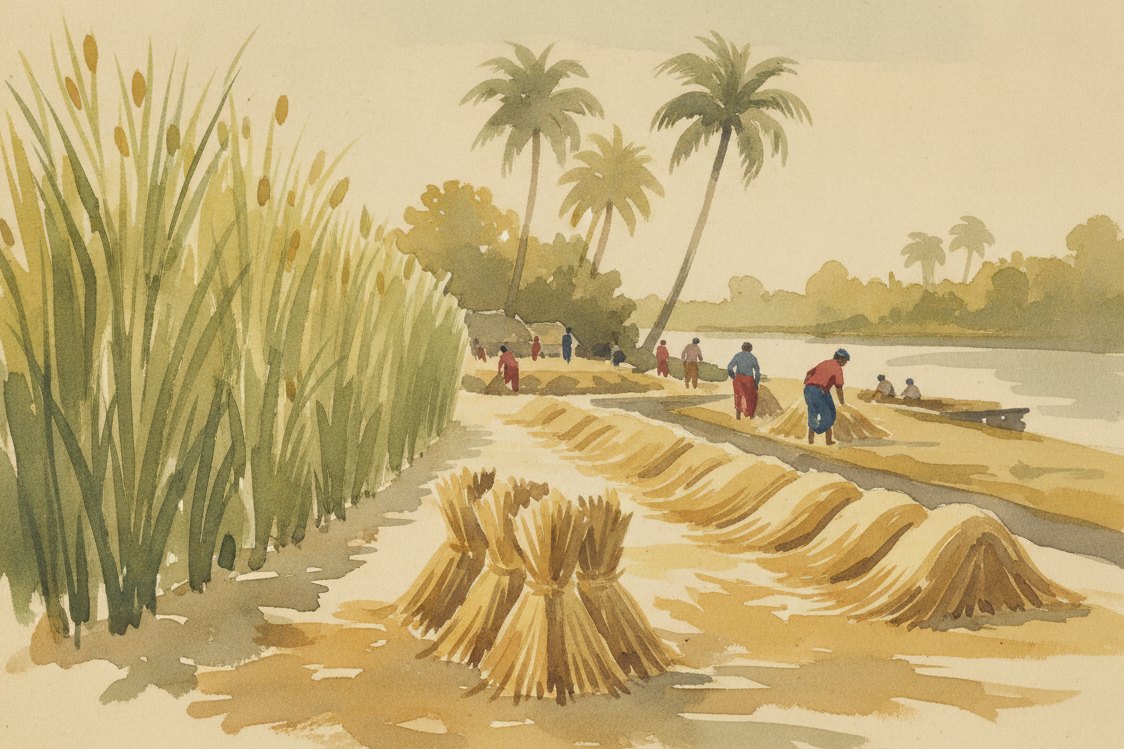
Jute is the great cheap fiber of the world, a long, soft, shiny bast fiber stripped from the stalks of plants grown chiefly in the Ganges delta of India and Bangladesh, where it is called the golden fiber for its color and its value to the economy. Strong, coarse, and biodegradable, it is spun and woven into the burlap and hessian of sacks and bags, into rope, twine, and carpet backing, and at its peak was second only to cotton among textile fibers in volume. Cheap to grow and kind to the soil, it is enjoying a revival as a sustainable packaging material.
Named for
From the Bengali jhuto or Sanskrit juta, a matted lock of hair, taken into English in the nineteenth century.
Common questions
- What is Jute made of?
- Jute is the great cheap fiber of the world, a long, soft, shiny bast fiber stripped from the stalks of plants grown chiefly in the Ganges delta of India and Bangladesh, where it is called the golden fiber for its color and its value to the economy.
- What is Jute named after?
- From the Bengali jhuto or Sanskrit juta, a matted lock of hair, taken into English in the nineteenth century.
Sources & References
- 1.Jute, Wikipedia
- 2.Bast fibre, Wikipedia
Related specimens


Stay in the loop
From the Almanac
Updates from Fabric Almanac, when there is something worth sharing.