The crisp, lustrous, naturally white bast fiber called China grass.
- First documented
- Antiquity
- Origin
- East Asia, China
- Fiber
- ramie
- Weave
- bast fiber, woven into crisp lustrous cloth
- Family
- fibers
Plate No. 130 · fabric
Ramie
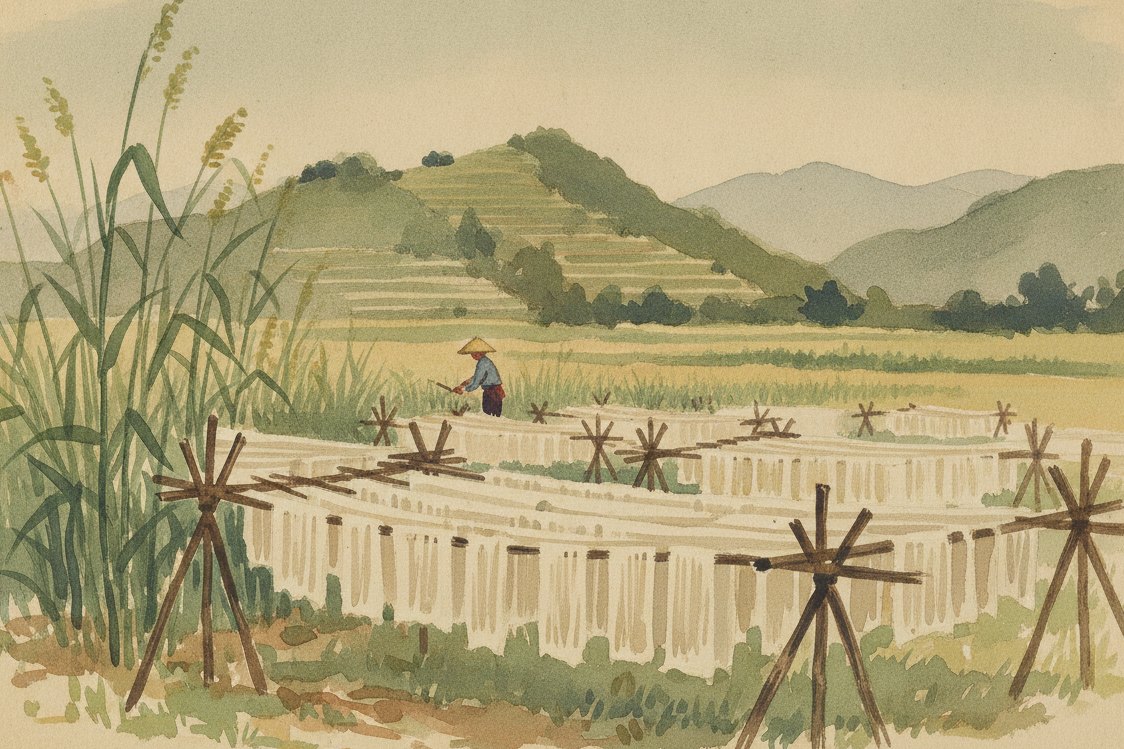
Ramie is a bast fiber from a nettle plant of East Asia, one of the oldest fibers used for cloth, found wrapping Egyptian mummies and woven across ancient China. Among the strongest of the natural fibers and even stronger wet than dry, it is naturally white, silky in luster, and resistant to bacteria and rot. But it is stiff and brittle, and extracting and spinning it is laborious, so it is most often blended, especially with cotton, to add strength and a crisp, linen-like hand. It is sometimes sold as China grass.
Named for
From the Malay rami, the name of the plant, taken into English in the nineteenth century.
Also known as
China grass
Common questions
- What is Ramie made of?
- Ramie is a bast fiber from a nettle plant of East Asia, one of the oldest fibers used for cloth, found wrapping Egyptian mummies and woven across ancient China.
- What is Ramie named after?
- From the Malay rami, the name of the plant, taken into English in the nineteenth century.
Sources & References
- 1.Ramie, Wikipedia
- 2.Boehmeria nivea, Wikipedia
Related specimens
Stay in the loop
From the Almanac
Updates from Fabric Almanac, when there is something worth sharing.