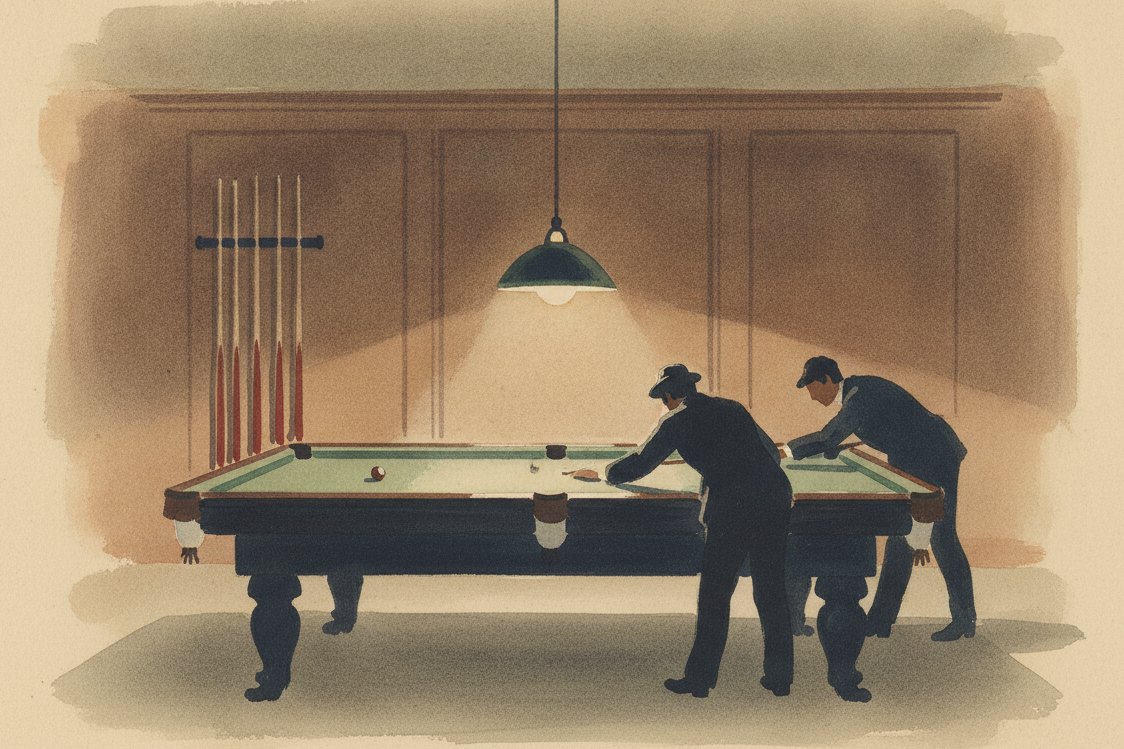
The felted nap of the card and billiard table.
- First documented
- 1500s
- Fiber
- wool
- Weave
- napped, felted woolen
- Family
- pile
Plate No. 138 · fabric
Baize
Baize is a coarse woolen cloth with a soft, raised, felted nap, most familiar today in a single iconic form: the green covering of billiard, snooker, and card tables, and the cloth of pinboards and the cushioned green baize door that separated servants from masters in grand houses. Brought to England by Flemish weavers among the new draperies of the sixteenth century, it was once a broad utility cloth made in many colors, but the smooth, quiet, dense green surface that grips a rolling ball is what fixed its name in the language.
Named for
From the older English bays, a plural treated as singular, from the French baies, names of a coarse woollen cloth brought by Flemish weavers.
Also known as
bayes
Modern equivalent
The closest cloth in this catalogue you can source today.
Common questions
- What is Baize made of?
- Baize is a coarse woolen cloth with a soft, raised, felted nap, most familiar today in a single iconic form: the green covering of billiard, snooker, and card tables, and the cloth of pinboards and the cushioned green baize door that separated servants from masters in grand houses.
- Where does Baize come from?
- Baize comes from the United Kingdom, Flanders and England, first documented in the 1500s.
- What is Baize named after?
- From the older English bays, a plural treated as singular, from the French baies, names of a coarse woollen cloth brought by Flemish weavers.
Often confused with
Sources & References
Related specimens

Stay in the loop
From the Almanac
Updates from Fabric Almanac, when there is something worth sharing.