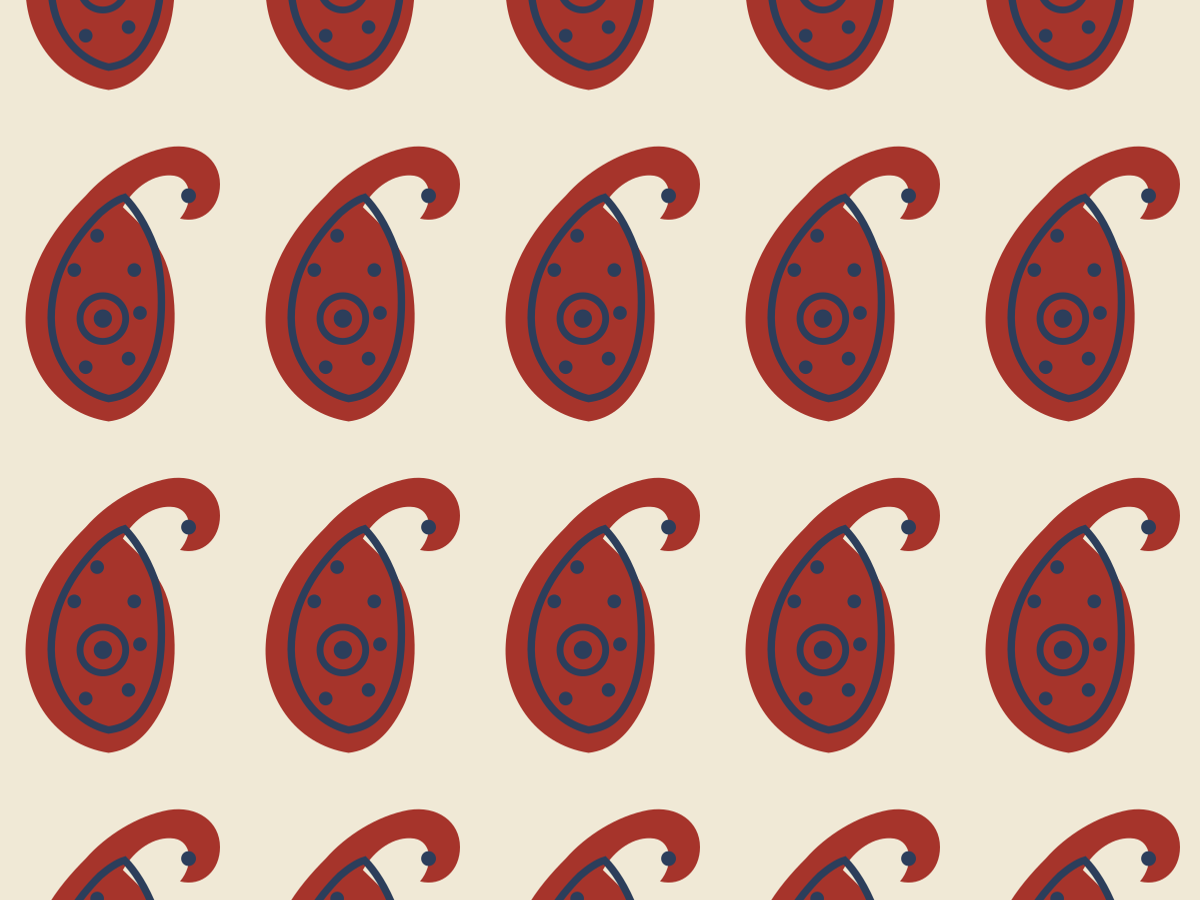
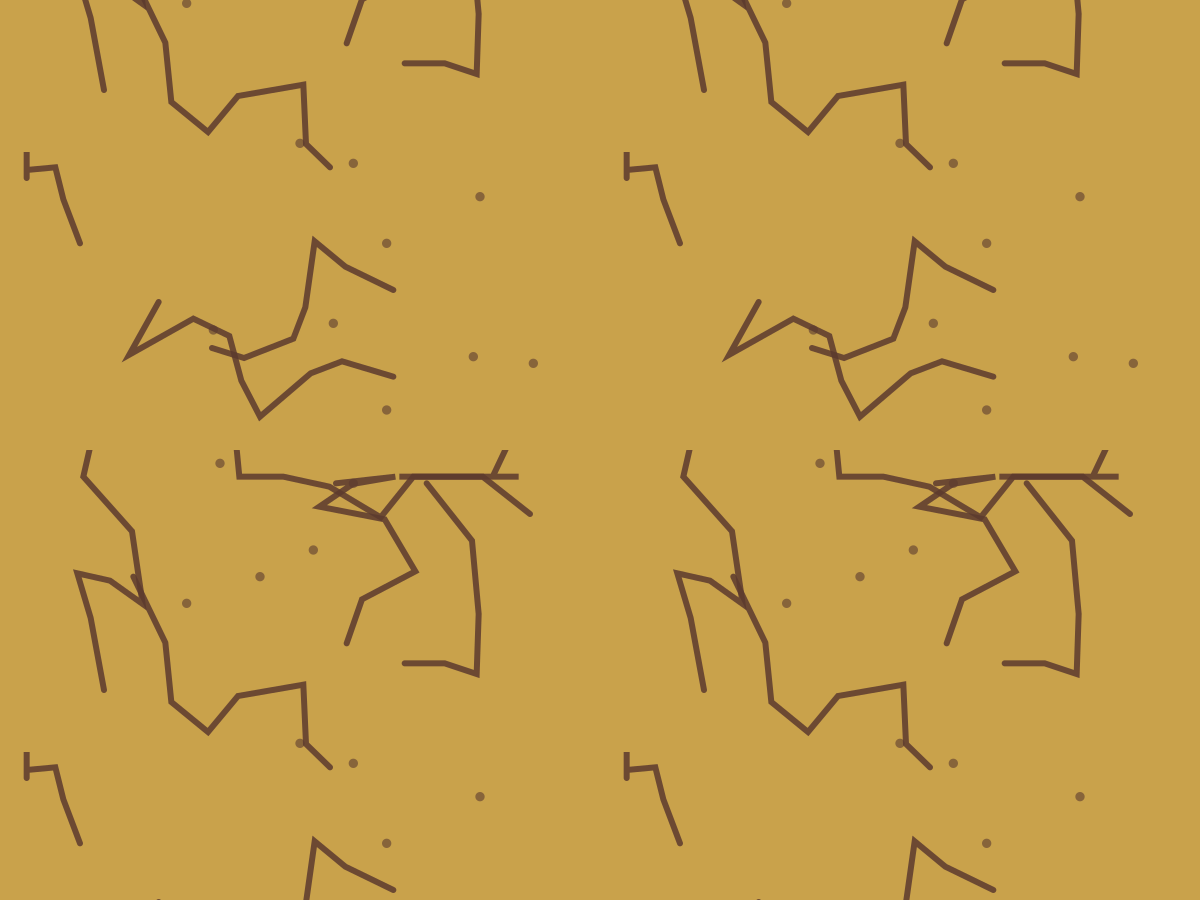
The classic workwear square. Ground color shows through the motif details, the discharge-print look.
- First documented
- 1700s
- Origin
- South Asia, India
- Fiber
- cotton
- Weave
- printed cotton square
- Family
- motifs
Plate No. 056 · pattern
Bandana
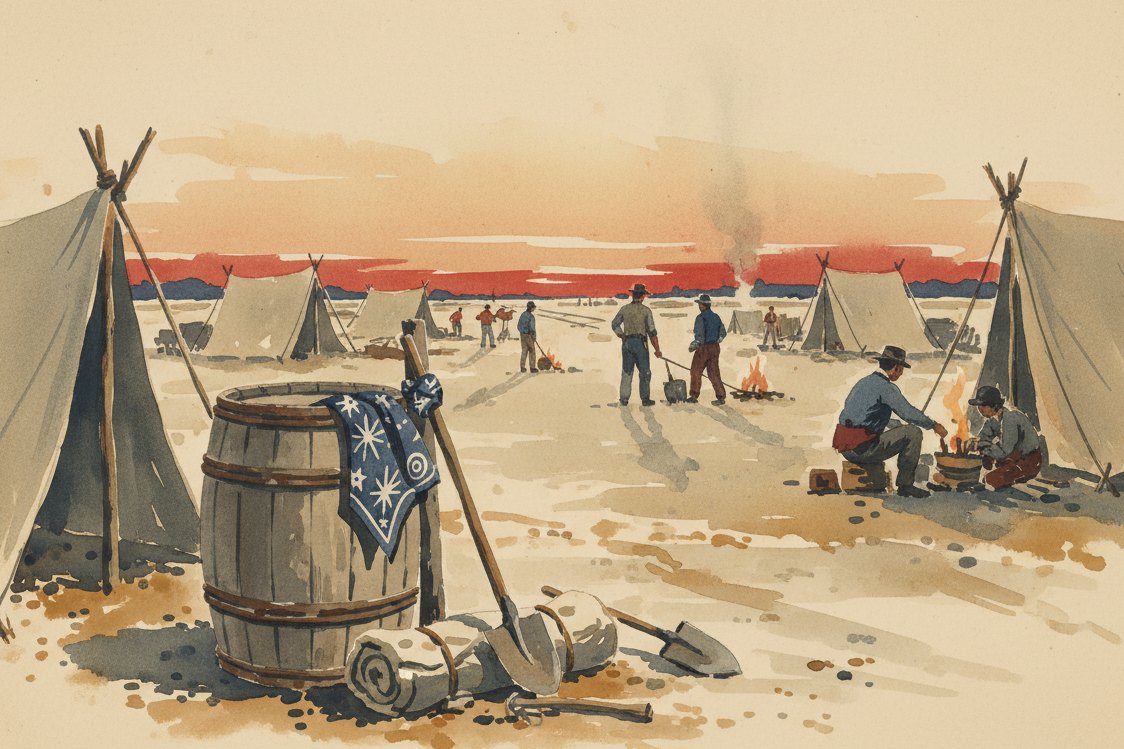
The bandana is a printed cotton kerchief, classically a deep indigo or turkey red square covered in white paisley botehs and dotted borders. The word comes from the Hindi for tie-dyeing, and the first bandanas reaching Europe and America in the eighteenth century were Indian resist-dyed squares; mill printing later fixed the now-standard paisley-and-dots layout. Few textiles have worked harder across class lines: sailors, farmhands, railroad crews, cowboys, miners, and bikers all made the same square of cloth part of the uniform.
Named for
From the Hindi bandhnu, tie-dyeing: the original bandanas were Indian resist-dyed kerchiefs.
Also known as
bandanna
Common questions
- What is Bandana made of?
- The bandana is a printed cotton kerchief, classically a deep indigo or turkey red square covered in white paisley botehs and dotted borders.
- Where does Bandana come from?
- Bandana comes from India, South Asia, first documented in the 1700s.
- What is Bandana named after?
- From the Hindi bandhnu, tie-dyeing: the original bandanas were Indian resist-dyed kerchiefs.
Sources & References
Related specimens

Stay in the loop
From the Almanac
Updates from Fabric Almanac, when there is something worth sharing.