Rose and OXO bands; only two colors carried per row.
- First documented
- 1850s
- Fiber
- wool
- Weave
- stranded colorwork knitting in horizontal bands
- Family
- knits
Plate No. 160 · pattern
Fair Isle
Fair Isle is the stranded colorwork of the Shetland Islands, knitted by carrying two colors of yarn across each row and swapping them to build horizontal bands of small geometric motifs, the eight-point rose, the OXO, and the tiny peerie patterns between. Although a finished piece glows with many colors, the rule is strict: only two colors travel in any single row, the rest are stacked band by band. Named for the tiny island of Fair Isle, the technique stayed local until the Prince of Wales, later Edward VIII, wore a Fair Isle pullover in the 1920s and made it a fashion across Britain. Its palette grew from the natural browns and greys of Shetland sheep plus a few plant and madder dyes.
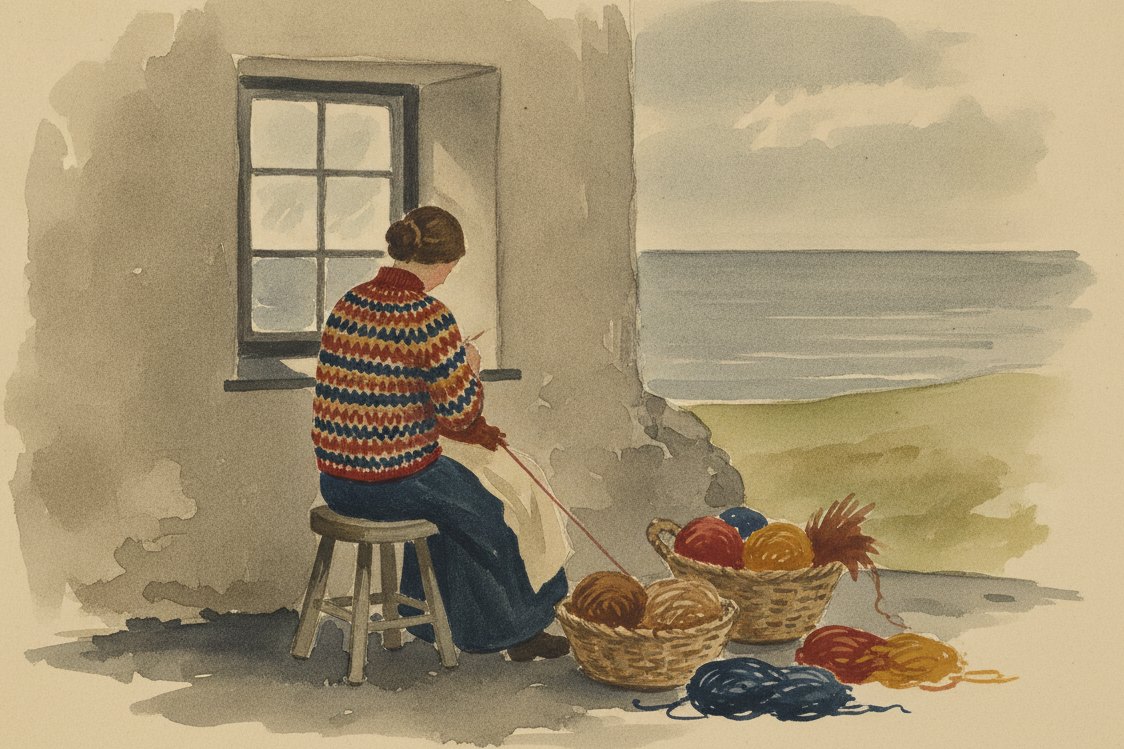
Named for
Named for Fair Isle, the small island between Shetland and Orkney where the technique is traditional.
Common questions
- What is Fair Isle made of?
- Fair Isle is the stranded colorwork of the Shetland Islands, knitted by carrying two colors of yarn across each row and swapping them to build horizontal bands of small geometric motifs, the eight-point rose, the OXO, and the tiny peerie patterns between. It is traditionally made of wool.
- What is Fair Isle named after?
- Named for Fair Isle, the small island between Shetland and Orkney where the technique is traditional.
Often confused with
Further reading
- MEND! A Refashioning Manual and Manifesto by Kate Sekules
A guide to visible mending and textile repair, covering over thirty techniques, including the color-matched darning a stranded colorwork knit needs.
Sources & References
- 1.Fair Isle (technique), Wikipedia
- 2.Knitted fabric, Wikipedia
Related specimens
Stay in the loop
From the Almanac
Updates from Fabric Almanac, when there is something worth sharing.